
Who Updates the Answer When Your Price Changes?
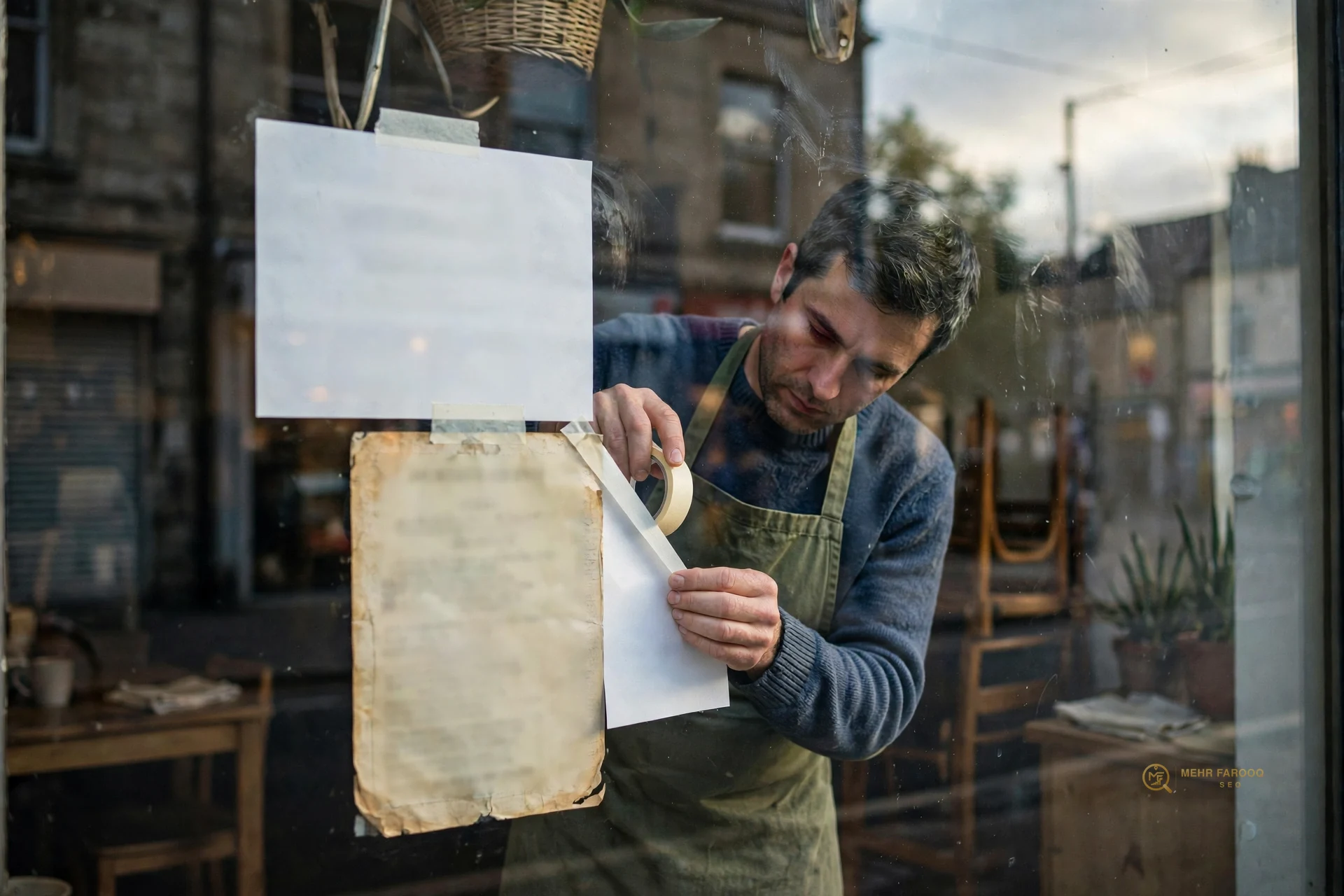
What happens to a fact after you change it?
On 16 October I renamed one of my brands. Pasadena Attic Mold Removal became Pasadena Attic Care — a better name, chosen deliberately, and the renaming itself took an afternoon: new words on the site, the new name on every profile I control. Three weeks later the old name is still in circulation — in copies, caches and summaries made before the change, all still answering to a name the business no longer uses. Nothing about that is broken. It is simply what a change looks like from the web’s side: the fact moved; its copies did not get the memo.
Last week I did it again, in the other direction. Pages on my Houston roofing site were corrected — claims the business could not stand behind came out, and my copy now tells the truth. But every summary, scrape and answer built from the older pages still carries the older version, and will, until it happens to be re-read. A change, I am learning, is not an event. It is the start of a long tail.
Where does the old version go on living?
Everywhere the fact was ever written down by someone else. A local business’s price, hours and phone number do not live in one place. They live in dozens — directories, map listings, review sites, scraped databases, and now the reading that AI systems have done of all of the above. You own exactly two of those places outright: your website and your Google Business Profile. Everything else is a copy, and copies have no obligation to you.
That is why the old version is so durable. It is not that anyone defends it; it is that nobody is tasked with retiring it. The directory that copied your hours in March is not watching your door in November. The answer assembled from last quarter’s pages is not being rude when it quotes last quarter’s price — it is being faithful to the only version it was ever given.
Is anybody subscribed to your changes?
No — and this is the quiet mechanical fact underneath the whole problem. There is no notification. When you change a price on Tuesday, no listing, database or AI system receives a memo on Wednesday. Each copy updates on its own schedule: when it next re-reads you, if it ever does. Between the change and the re-read, the old fact keeps working — quoted, summarised and handed to your customers with undiminished confidence.
We are used to a web that feels live, so we assume our edits travel at the speed of our typing. They travel at the speed of other people’s crawlers. Until a source is re-read, the answer built from it is a photograph of your business as it was — and a photograph does not age inside the frame. It just quietly stops being true.

So whose job is the update?
Yours — but aimed at the right target. You cannot chase every copy; there are too many, and most would never take your correction anyway. What you can do — and what I have had to learn to do on a schedule — is keep the two sources you own so current that every re-read, whenever it happens, picks up the truth. The copies are downstream. Your website and your business profile are the spring.
On my own profile, that has meant unglamorous handwork this month: writing the service descriptions properly, correcting details that were set at creation and never revisited, putting an opening date where there was none. On the roofing site it meant going page by page and taking out what could not be stood behind. None of it announced itself. All of it is the actual mechanism by which the answers about my businesses will eventually change — because the answers have no other mechanism.
Why doesn’t fixing the source fix it everywhere, at once?
Because “eventually” is doing real work in that sentence. One listing re-reads you this week; another holds its copy for a year. An AI answer tomorrow may be built from your corrected page or from a directory still quoting the old one — and from the outside the two answers look identical: same confidence, same fluency, different facts. The correction propagates like weather, not like a switch.
And the stale version is not harmless while it lasts. A customer who arrives at hours you no longer keep does not blame a database. A caller who reaches a number you retired does not think “the copies lagged” — they think the business is careless, or closed. The old fact keeps answering in your name, and its mistakes are billed to you. That is the whole argument for treating the update as part of the change itself: the price is not really changed until the pages the answers are built from say so.

So who updates the answer when your price changes?
The short version: nobody updates the answer. You update the sources, and the answer follows at the speed of being re-read — which is why the honest answer to the title is: you do, upstream, by hand, and then you wait. The businesses that understand this stop treating their website and profile as a launch task, done once, and start treating them as a standing appointment with the truth — every change in the business gets a same-day twin on the pages.
So here is today’s question, for everyone whose business now lives in other people’s copies — which is every business: the last thing you changed — a price, an hour, a number, a name — did the pages the answers are built from hear about it the same day, or is the old version still out there, answering for you?
Want SEO built on proof, not promises?
I build and rank websites for home service businesses — and I test everything on my own sites first.